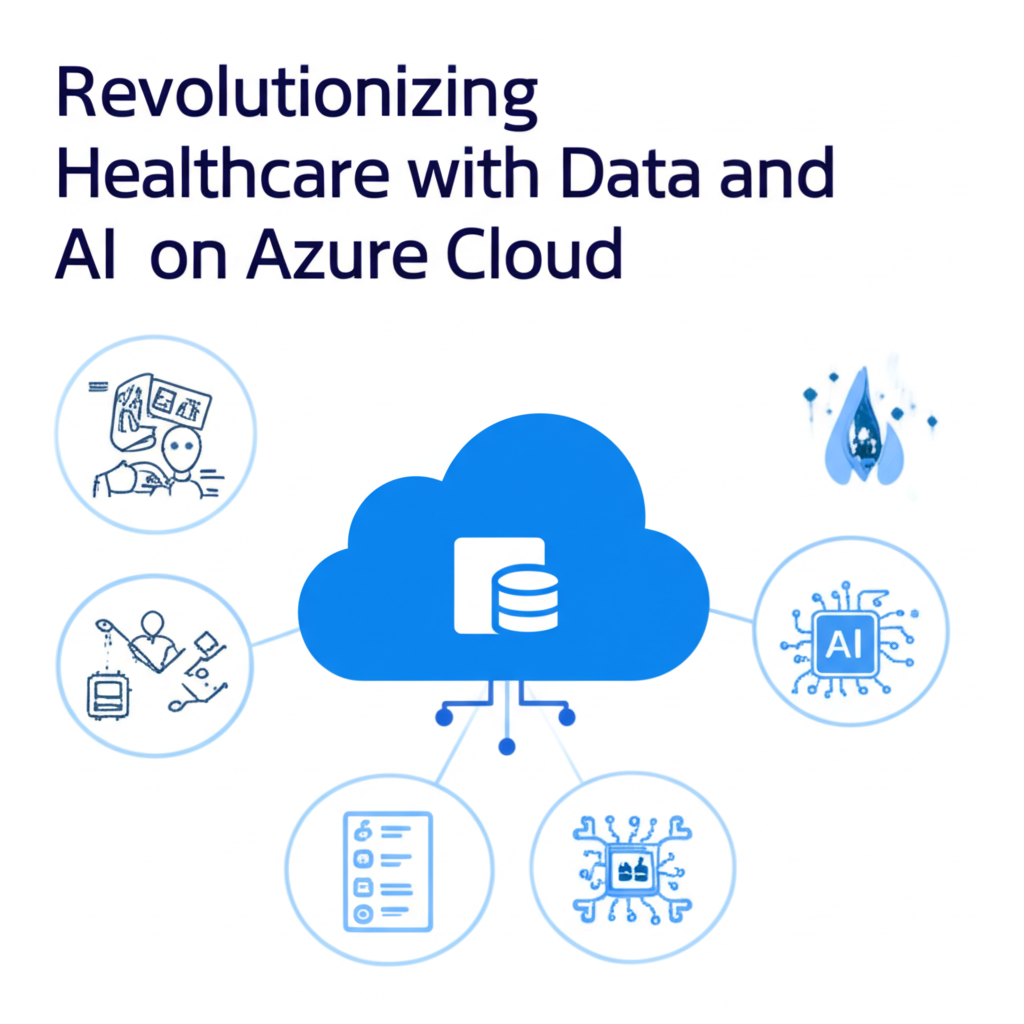
Revolutionizing Healthcare with Data and AI on Azure Cloud
In this comprehensive exploration, we will delve into how the synergistic power of data and AI, meticulously orchestrated within the secure and scalable environment of Azure Cloud, is fundamentally reshaping every facet of healthcare, from preventative care and diagnostics to personalized treatments and administrative streamlining.
The Healthcare Data Deluge: A Challenge and an Opportunity
Healthcare generates an astonishing volume of data. Every patient visit, every diagnostic test, every medical image, every genomic sequence, and every wearable device reading contributes to a burgeoning ocean of information. Electronic Health Records (EHRs), medical imaging (X-rays, MRIs, CT scans), genomic data, clinical trial results, pharmaceutical research, public health records, and even data from fitness trackers and smartwatches collectively create a complex, multi-dimensional data landscape. The challenge lies not just in collecting this data, but in making sense of its fragmented, often unstructured nature, while simultaneously ensuring its security, privacy, and interoperability.
Yet, within this deluge lies an unparalleled opportunity. When harnessed effectively, this data can reveal hidden patterns, predict disease progression, identify optimal treatment pathways, and even accelerate the discovery of new therapies. The ability to extract actionable insights from this vast and intricate web of information is precisely where AI, empowered by scalable cloud infrastructure, plays a transformative role.
Azure as the Foundation: Why the Cloud Matters for Healthcare
Transforming healthcare with data and AI requires an infrastructure capable of handling massive workloads, ensuring ironclad security, and providing global accessibility. Microsoft Azure emerges as an ideal foundation for several compelling reasons:
- Scalability and Elasticity: Healthcare data volumes are unpredictable and often enormous. Azure’s ability to scale compute and storage resources up or down on demand ensures that healthcare providers can manage petabytes of data without prohibitive upfront infrastructure costs.
- Security and Compliance: Protecting sensitive patient information (PHI) is paramount. Azure offers industry-leading security features and adheres to stringent global and regional compliance standards, including HIPAA, GDPR, ISO 27001, and more. Its robust security framework provides a trusted environment for handling highly confidential data.
- Cost-Effectiveness: By shifting from capital expenditure on hardware to an operational expenditure model, healthcare organizations can significantly reduce IT costs, free up resources, and reinvest in patient care and innovation.
- Global Reach and Collaboration: Azure’s extensive network of data centers worldwide facilitates global collaboration for research, enables telemedicine initiatives across borders, and supports distributed care models, bringing specialized expertise to remote areas.
- Integrated AI and Data Services: Azure provides a comprehensive suite of pre-built AI services, machine learning platforms, and data analytics tools that are specifically designed to work seamlessly together, accelerating development and deployment of intelligent healthcare solutions.
AI in Action: Transforming Healthcare Workflows
The application of AI within healthcare, powered by Azure, is diverse and impactful, redefining virtually every aspect of the industry:
Predictive Analytics for Disease Prevention and Early Detection
AI algorithms can analyze vast datasets to identify individuals at high risk for developing chronic diseases like diabetes, cardiovascular disease, or even predicting outbreaks of infectious diseases. By proactively identifying at-risk patients, healthcare systems can intervene earlier with personalized preventative care plans, dramatically improving outcomes and reducing the burden of advanced disease.
Personalized Medicine and Treatment Plans
Precision medicine, once a distant dream, is now a reality. AI analyzes a patient’s unique genetic makeup, lifestyle, environmental factors, and medical history to tailor treatment plans with unprecedented accuracy. This leads to more effective therapies, minimizes adverse drug reactions, and accelerates the discovery of novel drug candidates by simulating molecular interactions and predicting efficacy.
Operational Efficiency and Resource Optimization
Hospitals and clinics are complex operations. AI can optimize resource allocation, such as hospital bed management, operating room scheduling, and staff rostering, leading to reduced wait times, improved patient flow, and more efficient use of expensive medical equipment. AI-powered supply chain management ensures critical medical supplies are always available, reducing waste and improving readiness.
Enhanced Diagnostics with Computer Vision and NLP
- Medical Imaging Analysis: Azure Cognitive Services and Machine Learning enable AI models to analyze medical images (radiographs, MRIs, CT scans, pathology slides) with incredible speed and accuracy, often identifying subtle anomalies that might be missed by the human eye. This assists radiologists and pathologists in making faster, more precise diagnoses, particularly in oncology and neurology.
- Natural Language Processing (NLP): AI can extract critical insights from unstructured clinical notes, discharge summaries, and research papers. NLP helps automate coding, identifies relevant patient symptoms, and supports clinical decision-making by summarizing vast amounts of textual data.
- Virtual Assistants and Chatbots: AI-powered chatbots, like Azure Health Bot, can provide patients with answers to common health questions, assist with appointment scheduling, and offer preliminary symptom assessments, freeing up human staff for more complex tasks and improving patient engagement.
Key Azure AI and Data Services for Healthcare
Microsoft Azure offers a powerful ecosystem of services tailored for healthcare innovation:
- Azure Data Lake & Azure Synapse Analytics: For scalable data storage, ingestion, processing, and warehousing of diverse healthcare datasets.
- Azure Machine Learning: A comprehensive platform for building, training, and deploying custom AI and machine learning models, from predictive analytics to image recognition.
- Azure Cognitive Services: Pre-trained AI models for vision, language, speech, and decision-making, allowing developers to integrate powerful AI capabilities into applications without deep AI expertise.
- Azure Health Bot: A managed service that enables healthcare organizations to build intelligent, compliant, AI-powered virtual assistants for patient engagement.
- Azure API for FHIR: Facilitates interoperability by providing a fully managed, compliant Fast Healthcare Interoperability Resources (FHIR) service, enabling seamless data exchange between disparate healthcare systems.
Challenges and Ethical Considerations
While the promise of data and AI in healthcare is immense, it’s crucial to acknowledge and address the challenges:
- Data Privacy and Security: Maintaining patient trust is paramount. Robust encryption, access controls, and adherence to regulatory frameworks are non-negotiable. Azure’s commitment to these areas is a cornerstone of its healthcare offerings.
- Bias in AI Algorithms: AI models are only as good as the data they are trained on. Biased or unrepresentative datasets can lead to unfair or inaccurate outcomes for certain patient populations, necessitating careful data curation and ethical AI development practices.
- Regulatory Hurdles: The healthcare sector is heavily regulated. Innovators must navigate complex legal and ethical landscapes to ensure their solutions are compliant and safe.
- Interoperability: Integrating new AI solutions with existing legacy healthcare IT systems can be complex, requiring robust API strategies and data standardization efforts.
- The “Human Touch”: AI is a powerful tool for augmentation, not replacement. The human element—empathy, critical thinking, and complex clinical judgment—remains indispensable in healthcare.
The Future of Healthcare: A Collaborative Ecosystem
The revolution in healthcare driven by data and AI on Azure Cloud is not merely a technological shift; it’s a paradigm change towards a more proactive, personalized, and efficient system. The future of healthcare is one where AI acts as an intelligent co-pilot for clinicians, empowering them with actionable insights and freeing them to focus on the human aspect of care. It’s a future where preventative measures are prioritized, treatments are precisely tailored, and operational inefficiencies are minimized.
This transformation requires a collaborative ecosystem—one where healthcare providers, technology innovators, researchers, and policymakers work in concert. By leveraging the secure, scalable, and intelligent capabilities of Microsoft Azure, healthcare organizations can unlock the full potential of their data, empower their workforce, and ultimately deliver better, more equitable outcomes for patients worldwide. The journey has begun, and the horizon promises a healthier future for all.